
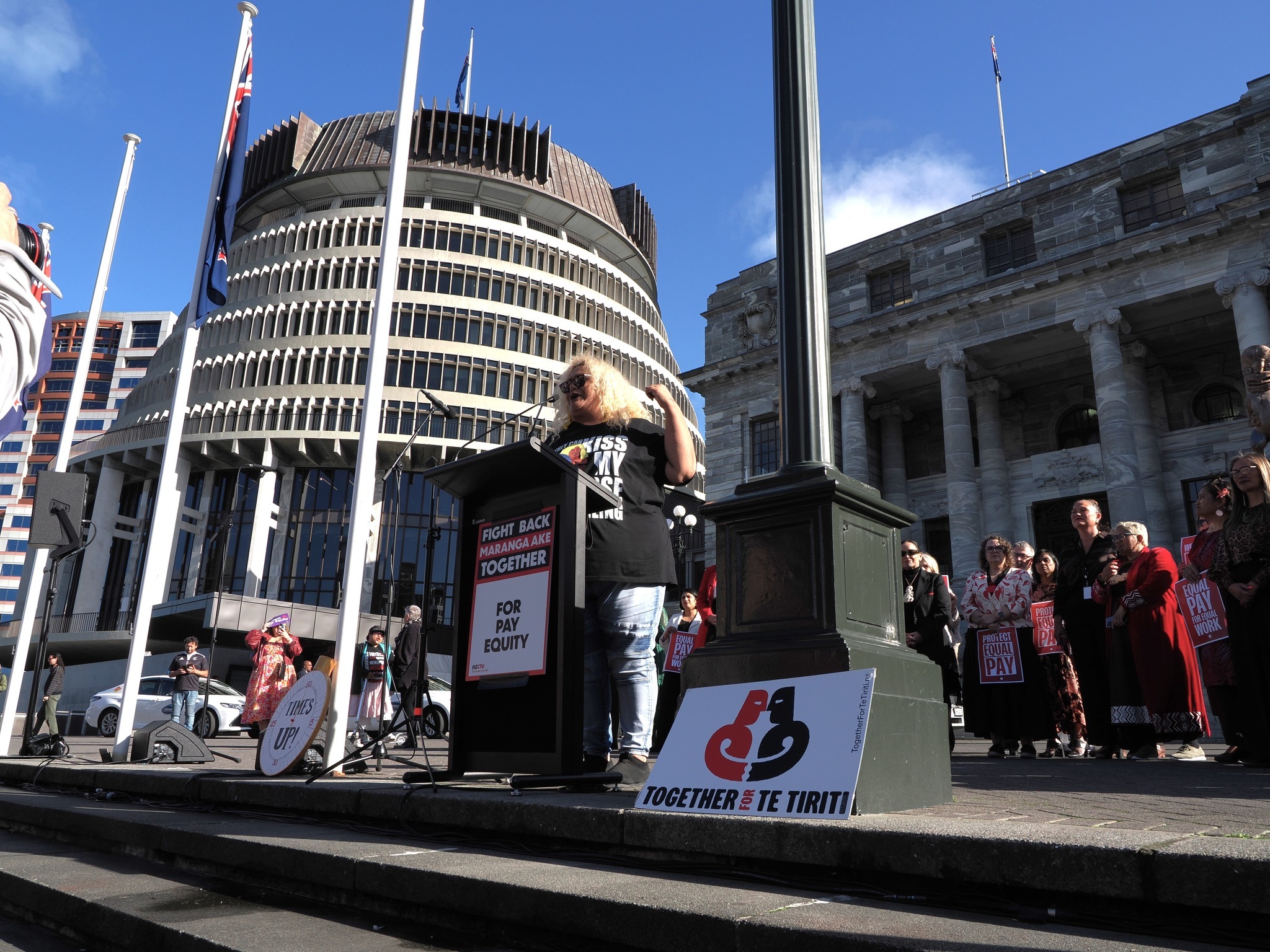
Te Uru Tāngata Centre for Workplace Inclusion Chief Executive Maretha Smit examines the findings of the People's Select Committee report into recent pay equity legislation changes — and what they signal for fairness, trust, and the future of work in Aotearoa.
Just days before we marked International Women's Day — with its 2026 theme of Rights. Justice. Action. For ALL Women and Girls — a report from the People's Select Committee on Pay Equity delivered a stark counterpoint.
It found that the Government's decision to pass the Equal Pay Amendment Act under urgency, without a select committee process or public consultation, represented a significant departure from established democratic practice.
The impact was that 33 existing pay equity claims — brought by workers in female-dominated sectors — were immediately extinguished. These were claims built on years of evidence, legal precedent, and good-faith negotiation to demonstrate systemic undervaluation compared with male-dominated work. Retrospectively cancelling claims already well underway, affecting hundreds of thousands of women, is a serious intervention — one that raises legitimate questions about legal principle, as well as policy. At the same time, the threshold for future claims has been raised, with the Committee warning that new claims could be delayed for years.
Together, these changes reshape the pathway to pay equity in Aotearoa.
Pay equity has always been about correcting historic undervaluation — the legacy of assumptions about the worth of "women's work" that continue to shape pay, workforce participation, and the sustainability of essential services. Progress in this space has been hard-won, often slow, and dependent on robust, evidence-based mechanisms.
When those mechanisms are dismantled or weakened, the effects reach well beyond individual claims. They show up in workforce shortages, in the strain on critical services, and in the economic security of the women, whānau and communities who rely on them.
There is also a broader economic argument that deserves attention. Closing gender pay gaps puts more money in the hands of lower-paid workers — predominantly women — and that spending circulates. It supports local business activity, increases tax revenue, and reduces reliance on social services. It improves child wellbeing, health outcomes, and educational attainment. Over time, it helps break intergenerational cycles of poverty and builds long-term economic resilience. Pay equity is frequently framed as a cost when, in practice, it is an investment with compounding returns.
The Committee's report also raises deeper questions about process and trust. Legislation affecting fundamental rights was advanced without the usual safeguards of consultation and scrutiny. For many, that signals a shift in how decisions are being made — and whose voices are considered in those decisions. Trust in systems is built on how outcomes are reached, as much as on the outcomes themselves.
In the days following the report's release, Equal Employment Opportunities Commissioner Professor Gail Pacheco noted that the changes to New Zealand's pay equity framework undermine human rights protections and are inconsistent with our obligations under Te Tiriti o Waitangi, which requires the Crown to actively promote equity for Māori. These are concerns that extend to Aotearoa's broader commitment to fairness and equity, well beyond those directly affected by the legislative changes.
International Women's Day asks us to reflect on progress. It invites us to recognise the gains that have been made and to recommit to the work still ahead. It also creates a point of comparison — because commitments to rights, justice and action set an expectation that the systems shaping our workplaces, and the decisions that govern them, will reflect those same principles. The question is whether that alignment is real.
Pay equity shifts take time to show up in the data. What we are seeing today reflects the impact of past investment and effort. The effects of recent changes will take years to fully emerge.
That is what makes this moment consequential — for the future of pay equity claims, for the integrity of the systems that underpin them, and for whether the commitments we make on days like International Women's Day are ultimately matched by the decisions we take.