When Richard Mortensen joined the organisation now known as Te Uru Tāngata in 1997, Jim Bolger was Prime Minister, Google didn’t exist, and workplace inclusion was far from the mainstream conversation it is today.
Twenty-nine years later, Richard is preparing to retire from a workplace that has been one of the constants in his life — and where he has been a quiet, steady presence through decades of change.
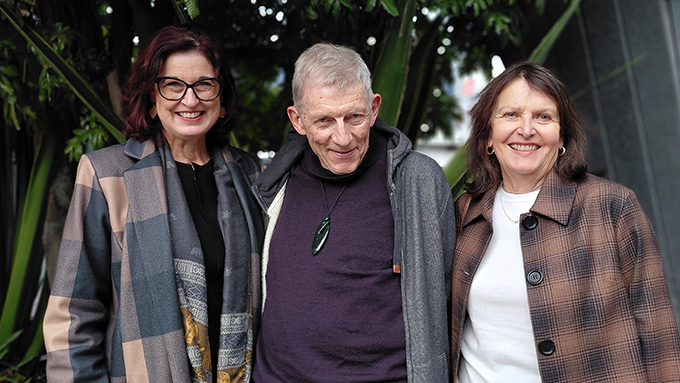
Richard began his journey in 1997, when the organisation was known as the Equal Employment Opportunities Trust and was based in Ellerslie. He is pictured above with current Chief Executive Maretha Smit and former EEO Trust Chief Executive Philippa Reid.
He has been part of the team through two office shifts and two new names, as we transitioned firstly to Diversity Works New Zealand and, last year, to Te Uru Tāngata Centre for Workplace Inclusion.
But the biggest change Richard has noticed is that workplace inclusion has become a far broader conversation, as New Zealand’s changing demographics have brought new groups and forms of discrimination into focus.
The growth in awareness is something he sees reflected in the Diversity Awards NZ™, which celebrate the work organisations are doing to create more inclusive workplaces.
“It’s nice to see people being proud of the work they are doing,” he says.
Richard’s own work has also changed significantly over nearly three decades.
When he began with the organisation, one of his tasks was putting together printed information packs for members. He was also responsible for filing and other administrative tasks.
As workplaces became increasingly digital, Richard was concerned about how he would continue to contribute to the organisation’s mahi. He didn’t need to worry — the team found him an online project he could participate in.
For the past four years, he has been organising academic papers and research using a referencing app, making it easier for the team to access information as needed. The project has also given him a much greater understanding of the work the organisation does and the context it operates in.
Richard, who has just turned 70, suffered a serious brain injury in a climbing accident in his early 20s. As a result, some of his physical abilities are limited, and he has worked part-time throughout his career.
He currently works at Te Uru Tāngata one day a week but has a full life outside the office. He is a committed member of the Brahma Kumaris movement and travels to spiritual retreats in Australia every couple of years. He also meets other members of the Brain Injury Association once a week to play cards and socialise and goes to the gym three times a week.
One of the main benefits of working has been the social contact it provides, Richard says.
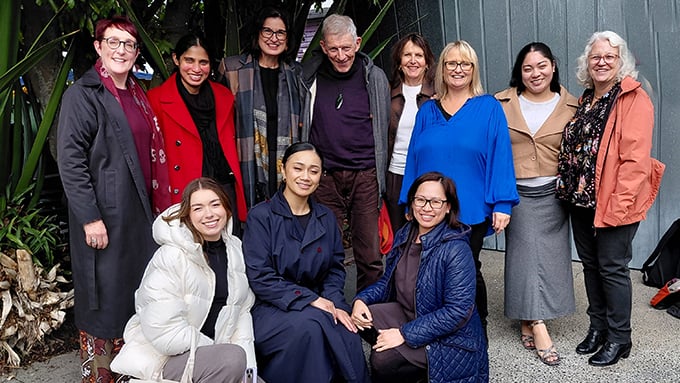
Being part of an office environment has given him the discipline of going to work and the opportunity to mix with people from different backgrounds and communities, and with different abilities — a diversity that is lacking from some of the other activities he participates in.
It has also allowed him to develop computer skills that come in handy for research, keeping in contact with friends and family digitally, and staying abreast of news here and overseas.
Richard says it is unusual for people with a traumatic brain injury to be able to maintain regular employment.
“Change is hard for people with brain injuries and concentrating for long periods can be difficult.”
But there are ways organisations can support people with brain injuries to participate in the workplace.
Richard says every person with a brain injury is different, and he would encourage organisations to look at the individual and what they can do, then provide work opportunities that match those capabilities.
Flexibility is also important, as many people with brain injuries may not manage full-time employment and need to juggle other activities and appointments to maintain good health and wellbeing.
Richard feels he has always been a good example of what people with a brain injury can achieve.
Retirement will hopefully free up some time to start Pilates so he can work on his balance, and he plans to pop into the office to visit the Te Uru Tāngata team from time to time.
Te Uru Tāngata Centre for Workplace Inclusion Chief Executive Maretha Smit says when someone has been with an organisation for as long as Richard has, they leave a mark on the culture.
“Richard hasn't just witnessed this organisation's evolution from the EEO Trust through Diversity Works to Te Uru Tāngata, he's been part of it. One of the things I'll miss most is his pride - in the organisation, in his work, and in the kaupapa. He cared deeply that we were an inclusive workplace ourselves, not just an organisation that talked about inclusion.”