
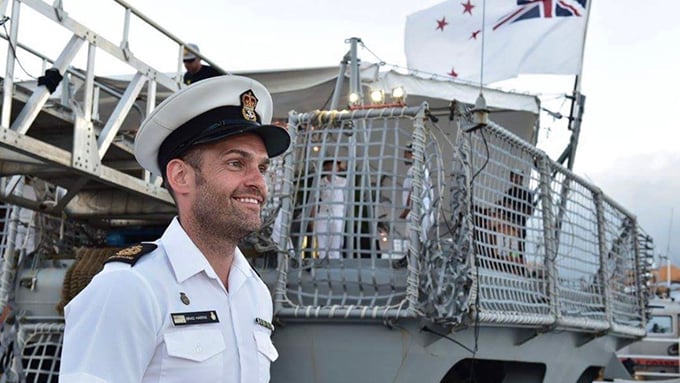
Brad Poulter’s powerful debut memoir Built For This shares his story of navigating military life as a gay man during a time when openness about sexuality was far less accepted than it is today.
Now Programme Lead for Op RESPECT at the New Zealand Defence Force and a Workplace Inclusion Accredited Professional, Brad has shared an extract from the book that recalls a moment early in his Naval Police career when after being told he didn't belong, he met one person who decided otherwise.
It was during my Naval Police transfer course when one of the instructors, a senior MP, pulled me aside. A Chief Petty Officer. Higher ranked, more experienced; someone who, on paper at least, I was supposed to respect.
They didn't sugarcoat it. Or hesitate. They just said it bluntly, like it was a simple fact of life. 'You won't make it far and you will struggle as a naval policeman because you are gay.'
Just like that. Matter of fact, like they were telling me the weather.
It hurt.
I was a Leading Hand at that point — not green, but not yet fully established either. I'd already been in the Service for a few years, long enough to know how the system worked. And in the Navy, rank isn't just something stitched on your shoulder. Rank is power. Rank is language. And with it, a very clear sense of where you sit, and when you should, or shouldn't, speak up. You learn early that some conversations aren't worth having. Not if you want to keep your head above water. You don't challenge the system; you work around it. You adapt. You survive.
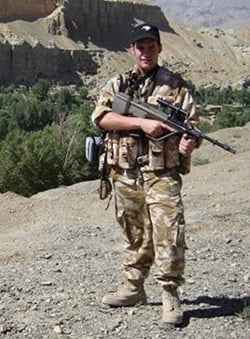 But that comment? That wasn't something you could just brush off. Because this wasn't about my performance or competency — this was about who I was, something central, something unchangeable, being presented as a liability. As a problem. As something that would compromise my ability to serve.
After that, the digs kept coming. Not direct, not outright, just those familiar, insidious ways that uniformed organisations are so good at. The comments that weren't quite serious enough to report but serious enough to sting. The kind that leave you wondering if you're being too sensitive, imagining it, or just making things worse by reacting.
Then came the one that tipped me over. I was pulled aside and told that when it came time to conduct searches on male personnel, I'd require supervision. Because apparently my sexuality now disqualified me from performing one of the most basic functions of the job without being treated like a risk. Like I couldn't be trusted. Like I was a threat.
This was a real choice presenting itself. I could shrink, apologise, do what so many before me had done: keep my head down, stay quiet, let it slide. Make it easier for them. Easier for me.
Or I could dig in.
I dug in.
Not to prove a point to anyone else, though part of me wanted to, but to prove something to myself. Because I wasn't going to let who I was, who I had fought like hell to finally be open about, be used as ammunition to question my integrity. If I was going to be judged, it was going to be on my work. On my conduct. On my ability to meet the standard — the same standard expected of everyone else. I had earned my place here; just like they had.
So I fought. Not with paperwork, or by making some sort of formal complaint. I don't think I even filled anything out. It may have actually been one of the other course members who got Steve involved. They saw what was happening, and they had my back.
At the time, Steve was the Support Training Officer; basically your divisional backup when you're under training. The person you can go to if things start going sideways. I told him I didn't really want to complain, I just wasn't having a good time on course. The truth was, the last thing I wanted to do at that point in my career was rock the boat. One wrong step, one poorly timed escalation, and that could've been it for me.
Steve Barker. The way he handled a situation that could have gone very badly very easily is a big part of why I stayed in the Navy. He had my back. He took it seriously. And he listened. That kind of leadership stays with you. For the first time in a long time, I started to believe there might actually be a future for me here. Not one built on hiding, or compromise, or constantly looking over my shoulder. A real one.
I still remember walking into Steve's office for the first time and spotting a pink triangle sitting on his desk, like it was the most ordinary thing in the world. I don't know if Steve put it there for me. But when you're looking for signs that you might be okay, you notice things like that. It made a difference.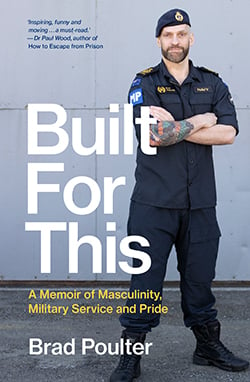 I don't know what Steve did behind the scenes after that meeting; I still don't. But I know this: things got better. The digs stopped, the weird energy went away. Steve gave me the classic My door is always open. Which has always made me laugh, because Navy doors aren't exactly known for being open. They're heavy. Watertight. They make you work just to get through them. But Steve meant it.
And that's a pattern you'll notice as you read this: it was never the policies that helped me. It was the people.
Built For This is available to buy at bookhero.co.nz